You'll love it if:
- You're into combat heavily focused on combo streaks
Not for you if:
- You're looking for a story that makes sense
- You appreciate visual fidelity over everything else
It may have been months since my last review for BGeek, but I couldn’t help but smile when Mike suggested I try Lost Soul Aside for this review. Lost Soul Aside is a third-person action/adventure title from Chinese developer Ultizero Games, developed with the help of the PlayStation China Hero program, an initiative by Sony to help the gaming development industry flourish in countries such as China and India.
Despite what the price of Lost Soul Aside may suggest, we’re not dealing with an AAA title, but rather an experimental project. As you may have gathered from my review of Stellar Blade, experimental one-off projects like these are my bread and butter. In an industry that is increasingly afraid to take risks – I don’t remember anyone asking for a seventh game in the Black Ops series – projects like these with low expectations are like an oasis in the desert.
Lost Soul Aside flew under the radar for many, especially since it happened to be released on the same day as Metal Gear Solid Δ, while at the same time its AAA price tag created expectations that were disproportionate to the scale of Ultizero’s project, especially considering that Mafia: The Old Country hit the shelves at a reduced price that same month. The truth is that if Lost Soul Aside had been priced in line with the scale of the project, perhaps our review would have been more forgiving.

TL;DR
Lost Soul Aside may offer over twenty hours of decent action gameplay, but once you finish it, it will be erased from your memory as soon as you pick up the next game in your backlog. With an indifferent plot, one-dimensional characters, and an empty world, Ultizero doesn’t give you much room to justify the price.
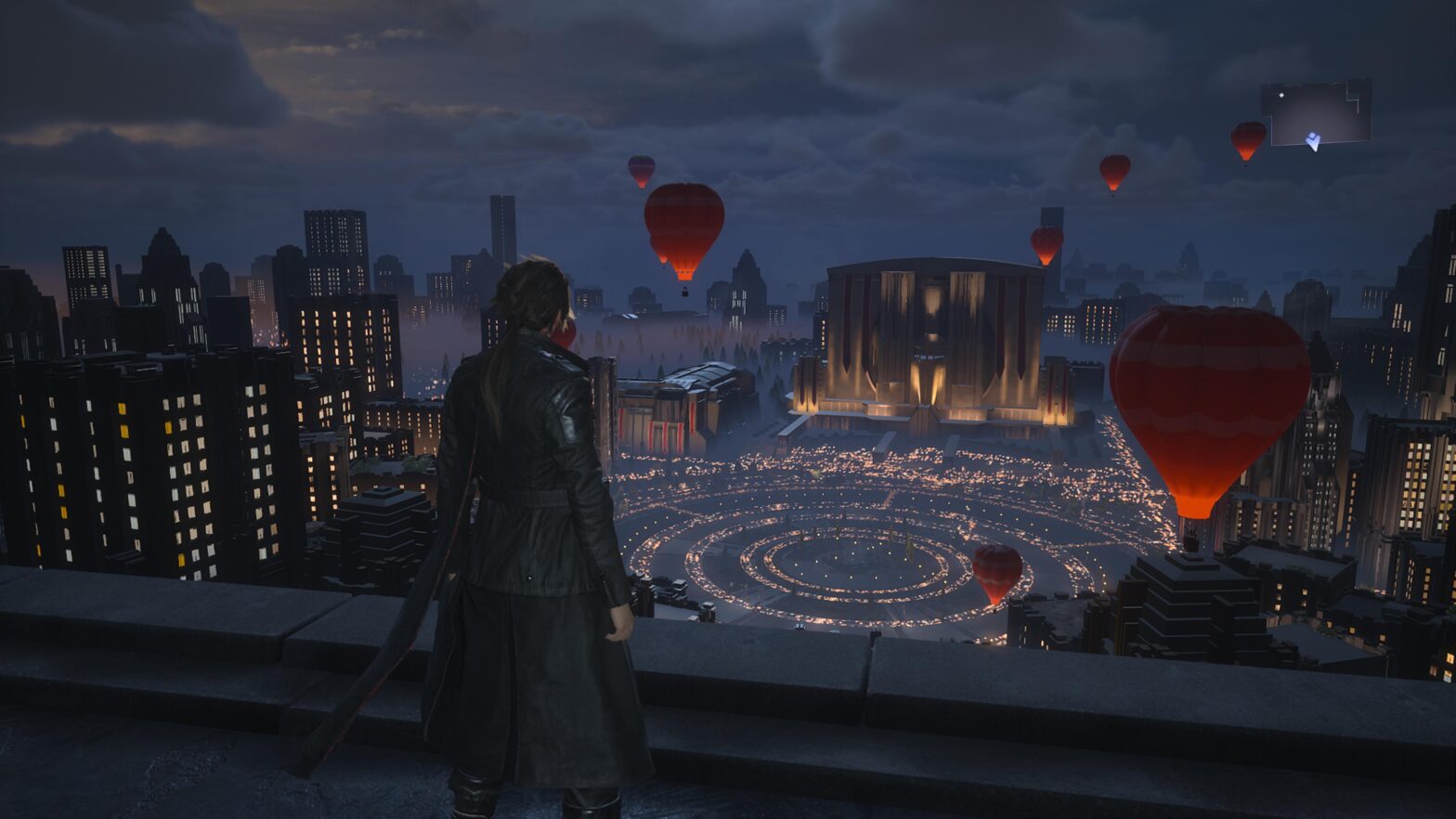
The images in this article are screenshots taken from Lost Soul Aside on the PS5.
Lost Soul Aside: Plot
Lost Soul Aside, without much of an introduction, plunges us into the world of Celestria, a country ravaged by a war that preceded the events of the story. Celestria is under the control of the authoritarian Empire, which oppresses its citizens with its military might, imposing unbearable taxes and condemning the inhabitants to poverty. Standing in the way of the Empire’s plans is the rebel organization Glimmer, which, through various “interventions,” constantly attempts to incite the citizens to rebel. A setting that is obviously inspired by Final Fantasy VII.
Our story follows Kaser, a prominent figure in Celestria due to his fighting skills, as he helps the citizens of his neighborhood resist the Empire’s guard. Kaser and his little sister, Louisa, join Glimmer through their friend Selene, who is also the leader of the organization. Glimmer prepares a major “intervention” during a celebration organized by the Empire, with the aim of attracting the attention of the crowd.


Searching for Louisa
However, everything goes wrong when an army of strange monsters called Voidrax appear and start attacking Glimmer and Empire at the same time. In the chaos, Kaser, trying to find his sister, frees the spirit of Lord Arena, a dragon-like Voidrax who had been imprisoned beneath the city of Celestria for centuries. Arena merges his soul with Kaser’s and uses the young warrior’s body as a host.
Upon returning to the surface, Kaser finally finds Louisa, but she is unconscious. Kaser explains that the evil Voidrax have stolen her soul, as they collect human souls to increase their power. However, there is a way to recover Louisa’s soul: go to Mount Salvation, where Aramon, leader of the evil Voidrax, is imprisoned.

Grand mission, small stakes
The plot is not one of Lost Soul Aside’s strong suits. Despite the relatively interesting setup of rebellion against tyranny, once the mysterious alien spirits are introduced, the initial storyline loses all sense of significance and seems small in comparison to the rest of the events. At the same time, we meet a bunch of characters who have extremely limited screen time and don’t play any particular role in the outcome of the plot, which made me wonder if the creators had a bigger role for them in their original plans but were cut along the way. At the same time, the protagonists, Kaser and Arena, have little chemistry between them, the dialogues are quite simplistic, and their relationship seems like a necessary compromise.
In any case, the plot has many parts where the characters need to explain events that happened off-screen, years prior to the events taking place before us. This destroys any form of immersion and takes away from the idea of a unified world.
Lost Soul Aside – Gameplay
Unlike the story, gameplay is Lost Soul Aside’s strong suit. It is a combo-based hack-and-slash game that offers intense moments of action. The fights are certainly interesting, but the big boss battles are few in number, meaning that you have to settle for many battles against the same soldier-type enemies for most of the game.

Feels like there’s always something missing
The gameplay of Lost Soul Aside is divided into two main parts: combat and light platforming. The light platforming part requires you to solve a couple of small puzzles, which are fairly easy and require either the use of movement mechanisms or the weapons available to Kaser. There are also some timed challenges, which reward you with bonus items or skill points.
Kaser has various weapons at his disposal that completely alter the combat style, from simple swords, greatswords, spears, and sickles. During the game, we are generously given new items and weapons, which we either find scattered around the world, in chests, or as rewards following a major battle. We can change the elements of the weapons to use magical attacks and even combine the elements for even more devastating attacks. The problem here is that items are very easy to obtain, and you will rarely find yourself in situations where you need to use more potions or even change weapon types – their main purpose is to give you the freedom to play the way you like, which is not necessarily a bad thing.
Ultizero does a good job of making you feel powerful. At any point in the game, you can defeat any enemy that stands in your way, no matter how huge or powerful they may seem. However, at no point do you feel that you have “earned” this power. Kaser is powerful from the start, and after joining forces with Arena, he becomes even more powerful. The player, however, does nothing to acquire this power; it is simply given to them by the game. It doesn’t feel like this power is a reward for some achievement; instead, you’re just using something that’s handed to you on a silver platter. Combined with the easy platforming sequences, apart from the boss fights, it’s hard to find anything truly memorable.


Lost Soul Aside – Presentation
As with the other aspects of Lost Soul Aside, the presentation also brings about mixed feelings. Ultizero’s ideas hold promise, but they never realize their full potential, so the final result seems mediocre at best.
Visually confused
The places you visit in Lost Soul Aside have no visual consistency between them. On the one hand, you start in Celestria, a city that reminds you of the technologically underdeveloped Slums of Sector 5, and then you are transported to a mountain full of ruins from another era and then to a high-tech dungeon like those found in Horizon Forbidden West. It’s as if the art design hasn’t decided whether it wants to focus on fantasy-themed magical monsters or sci-fi dungeons. The same problem arises with the character design, which, like the locations, is all over the place.
The biggest disappointment comes in the form of all elements not being properly utilized. The most striking example is Arena, who visually plays the role of a familiar, following Kaser everywhere. However, the same animation plays over and over again without any effect on the environment. As a result, Arena clips through other characters and objects and doesn’t seem to really exist in the game world. At the same time, there is a permanent fog effect that gives the screen a grayish tint, making the colors look faded. I thought we left these effects back in the early 2010s.
Lost Soul Aside is developed on Unreal Engine 4. Performance is as reliable as one would expect, but the game looks quite dated compared to titles we’ve seen recently.

Decent soundtrack, poor voice acting
The soundtrack is definitely one of the most entertaining parts of this title. It fits perfectly with the battles and contributes very positively to the experience. Unfortunately, I can’t say the same for the voice acting, which is usually off target. The script contains punchy dialogue, but the emotion is not always conveyed correctly by the voice actors. Especially Kaser’s voice actor seems conflicted, most of the time, about whether he should be ice cold or emotionally invested in the events.
Lost Soul Aside – Conlusion
Lost Soul Aside is a small-scale project with a large-scale price tag, which creates a lot of expectations for players before they even open the game. The combat is quite good, with several intense battles despite often lacking the big “oomph” moments that make you feel really powerful. Unfortunately, the other aspects of the game are largely lacking, with a story that you really struggle to engage with and an audiovisual presentation that lacks any real identity. Thus, the result is a game that you will have forgotten by the time you pick up the next one.

We would like to thank PlayStation Greece for providing the review key we used.